Hammer

The kitchen device that handles your groceries.

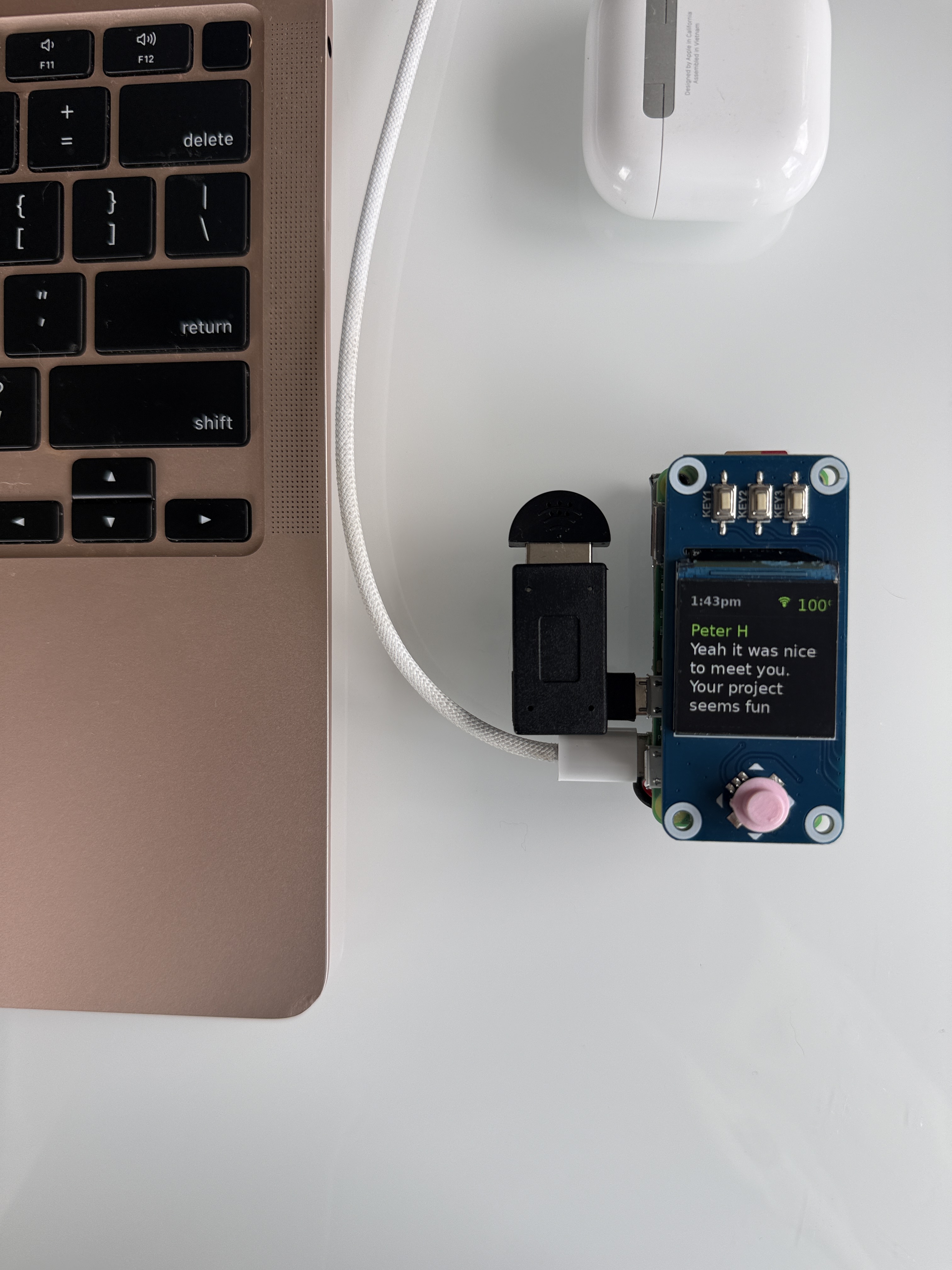
Hammer is a small device you talk to. It hears what you need, figures out where to get it, and handles the rest โ€” orders where it can, tells you what to grab from the bakery on your way home, and what to pick up on your Trader Joe's run Friday.

Order โ€” $150 Handbuilt and set up before it ships.
Plug in, connect to WiFi, done.
"The most profound technologies are those that disappear. They weave themselves into the fabric of everyday life until they are indistinguishable from it." โ€” Mark Weiser, The Computer for the 21st Century, 1991
Hammer device on a kitchen counter
For the household
The Customer

You talk to it. It handles the rest.

You're standing in the kitchen, you open the fridge, and you notice you're out of eggs. You don't open an app. You don't type anything. You just say it โ€” "eggs, also grab baguette from La Parisienne" โ€” and Hammer hears you, adds it to the list, and knows exactly what you mean.

When it's time to shop, you say "fulfill" and Hammer goes to work. It knows eggs come from QFC and orders them directly into your cart. It knows the baguette is from your local bakery and puts it on a separate pickup note. When it's done, you get a notification โ€” what's in your cart, what to grab on the way, what's on the list for Friday.

The more your household uses it, the smarter it gets. The first time you say "baguette from La Parisienne," that's it โ€” Hammer knows where baguette comes from. Every time after, you just say baguette. It routes itself. You're seeding a knowledge graph by just talking, and it compounds.

For the capital
The Investor

A $1T market that has never had an agent.

$1T
US grocery market
~150
items a household repeats every month
0
agents that actually place the order

Every household buys roughly the same groceries every week. The list changes slightly, the brands rarely do. Yet the entire workflow โ€” remembering, listing, searching, carting, checking out โ€” is still manual, every single time. Apps have digitized the cart but they haven't automated the decision. That gap is where Hammer lives.

The hardware is the wedge. A $150 device in the kitchen creates a persistent, ambient presence that no app can replicate. It hears what the household needs, in the moment it's needed, without requiring anyone to switch context. The data it collects โ€” which items, which stores, which brands, in which quantities, on what cadence โ€” is a household preference graph that deepens with every interaction and belongs entirely to the family, stored locally.

The moat is the knowledge flywheel. After three months of use, Hammer knows this household better than any grocery app, any loyalty program, or any retailer ever will. That knowledge transfers to every new retailer integration, every new category beyond groceries, every new household member who starts talking to it. The agent gets smarter without any retraining โ€” it learns by doing.

For the builder
The Candidate

AI that takes actions, not just answers questions.

Most AI work today is a chat interface wrapped around a model. This is different. Hammer is an agent that operates in the physical world โ€” it hears you, reasons about what you need, calls real APIs, places real orders, and reports back.

The engineering is unforgiving in the best way. We threw out the ReAct tool-calling loop when it hit rate limits on the third tool call โ€” six thousand tokens consumed before a single item was processed. We replaced it with a confidence-model pipeline: a Python loop that calls the LLM only where genuine ambiguity exists, roughly 150 tokens per decision. That kind of pragmatic systems thinking is what this work demands constantly.

The voice pipeline runs entirely on a Raspberry Pi โ€” Whisper for transcription, an LLM for intent and routing, Piper for text-to-speech, all coordinated without a cloud dependency in the critical path. The agent builds a private household knowledge graph from voice alone: "Trader Joe's puffs and olives" heard once means puffs and olives route to Trader Joe's as manual pickup forever, with no additional configuration. The system learns your household by listening to it.

The retailer abstraction layer routes items across stores with different capabilities โ€” Kroger via API, local bakeries via manual pickup list, any future retailer pluggable through the same interface. You would be working on the reasoning layer that makes the agent genuinely useful across all of them.

This is a small team working on a hard problem with a clear exit path. If you want to build AI that operates in the real world rather than inside a browser tab, send a note.

All three of you need to find each other.

A great exit โ€” IPO or acquisition โ€” requires a customer who loves it, capital that believes in it, and engineers who can build it to scale. If you're reading this page, that process has already started.

Get in touch